

Learning to Pause, Speak Up, and Heal

Chelsea never expected her life to change during an emergency hospital visit for an issue completely unrelated to diabetes. After a few days in hospital, and with plans underway for her to go home, a nurse’s sharp eye noticed something others had initially missed.
Her blood glucose levels and HbA1c (a marker of long-term blood glucose levels) were high.
This moment marked the start of her diabetes journey. One that would challenge her physically, emotionally, and mentally.
Diagnosis isn’t always straightforward.
Despite experiencing some of the common signs and symptoms of diabetes for a long period of time, - extreme thirst, constant hunger, frequent urination, and fatigue, Chelsea’s diagnosis wasn’t straightforward.
She recalls being around nine years old when she started to display symptoms of diabetes.
“I was just hungry all the time as a kid, and that got attributed to growing up. I remember eating exorbitant amounts of food for such a small child,” she says.
“I’d have a lunch box full of snacks because I was constantly needing to eat something. And I would carry a water bottle with me everywhere I went because I felt so thirsty all the time.”
Although she left the hospital with a ‘Diabetes 101’ survival guide provided to her by doctors and dietitians, it took months of testing and uncertainty to understand what type of diabetes she had. Eventually, she received a diagnosis of Type 1b diabetes – a rare and less understood subtype of Type 1 diabetes, also referred to as idiopathic diabetes.
It was because of that label that her diagnosis felt more like a placeholder than a real answer.
She hadn’t experienced diabetic ketoacidosis (DKA), nor had she felt acutely unwell leading up to her diagnosis. Her symptoms were subtle and had been overlooked for years.
Growing up in a Vietnamese household where English is a second language, Chelsea had seen diabetes up close. Her father and many relatives have been living with diabetes for decades. But diabetes wasn’t something that was openly talked about. Because of that, Chelsea didn’t realise that what she was experiencing wasn’t typical; it was just her ‘normal’.
Treatment with a twist
When she finally began insulin treatment, Chelsea felt a clarity she hadn’t known she was missing.
But the relief was short-lived.
“Starting insulin actually made it harder to understand my diabetes,” she explains.
“Doctors wanted to run tests to understand if my body was producing antibodies consistent with type 1 diabetes, but to do that, I needed to stop taking insulin for a substantial time. However, I couldn’t because the insulin was helping me.
Still, she persisted.
“As a Vietnamese-Australian, I rarely heard people around me speak openly about diabetes. There is still a lot of stigma, and type 1 diabetes is not common in Asian communities, so I felt quite alone at first,” she says.
“That pushed me to build my own support network, educate myself, and become my own advocate within the health system.”
Armed with a background in psychology, neuropsychology, and nutrition, Chelsea channelled her energy into understanding everything she could about diabetes. She began to build a network of peers, share knowledge and experiences, and became a fierce advocate.
Her story became one of encouragement, education, and connection.
“I especially wanted to raise awareness about the mental and emotional load of diabetes. I learnt how important it is to speak kindly to yourself but also others, especially when talking about diabetes.”
But it wasn’t without cost.
Chelsea’s rapid improvement with her blood glucose levels led to an unexpected complication.
She was diagnosed for a second time with retinopathy, a condition she had first experienced at 17 but was not previously attributed to diabetes.
The emotional toll of 'doing everything right' and still facing setbacks was heavy. She found herself managing a level of grief. Not just for her health, but for the life she had before diabetes.
“As I was diagnosed in my late 20s, I clearly remember what life was like without managing a chronic condition. I had to learn to adapt to this new life with diabetes. This came with moments of frustration and sadness, but also growth.”
Chelsea learned that living with a chronic illness means adjusting expectations. It means recognising when to push forward and when to pause.
A few months after her diagnosis, she made the difficult decision to step away from her career in psychology to focus on her health and adjust to her new reality. This experience taught her the importance of pausing when needed and that advocating for yourself includes knowing when to rest.
Chelsea’s journey taught her that self-advocacy isn’t just about speaking up in the doctor’s office. It’s about listening to your body, honouring your limits, and giving yourself permission to feel.
“Without diabetes, I wouldn’t have found this incredible community. Connecting with others living with diabetes and now working at Diabetes Victoria has been one of the most meaningful parts of my life. It’s really shaped who I am today.”
Her message is clear: Diabetes doesn’t define you, but it can shape you. And in that shaping, there is strength.
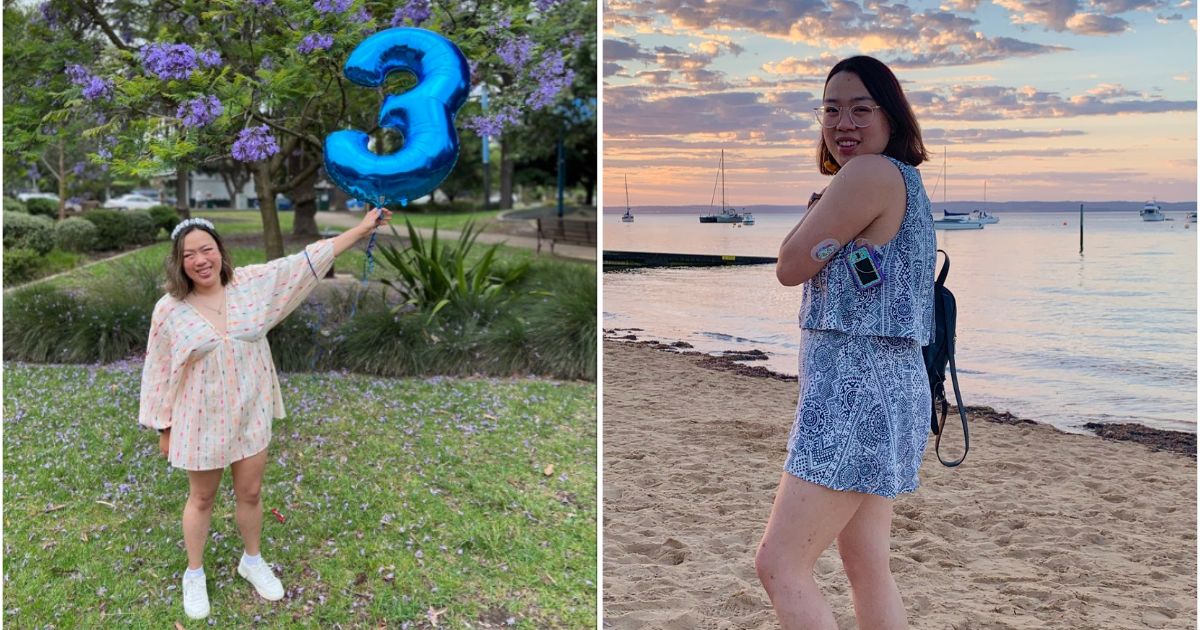
Special thanks to Chelsea for sharing her story so candidly with us.
Enjoy this story? Read more about Peyton and her diagnosis, determination and a dose of mum's advice!

Jo Walsh
Digital Communications Lead
Jo is an experienced digital communications professional with 20 years of experience in the digital space. With a strong technical foundation in social media strategy and website development, she brings both creativity and precision to her work.
Jo is also a passionate advocate for peer support, drawing on her lived experience with type 1 diabetes wishing to highlight the importance of connection within communities.


