

How to Approach Bubble Tea with Diabetes

Bubble tea has become a popular trend in major cities with new stores popping up left, right and centre. You would be forgiven for feeling a bit confused by bubble tea. It is after all, a drink that you can sip…and chew.
So, what is bubble tea and what do people with diabetes need to know about it?
What is bubble tea?
Bubble tea was created in Taiwan in the late 1980s. It is believed the original idea was to combine a popular Taiwanese dessert, sweetened tapioca pudding, with tea.
Bubble tea can come in many different forms, with endless ways to mix and match ingredients. The classic bubble teas have four main ingredients:
- Tea
- Milk (or a milk-alternative)
- Sugar or syrup
- Toppings
It really is a ‘choose your own adventure’ when it comes to the toppings. You can add things like:
- Custard
- Aloe vera
- Jelly
- Taro balls
- Crunchy seeds
- Popping candy
- Pearls (tapioca)
- Red beans
What is in bubble tea?
When we talk about the contents of bubble tea, we really must talk about the sugar content. While you may think of tea as the harmless drink your nanna loves, bubble tea is not quite the same. Bubble tea contains a lot of sugar. Of course, the sugar content will vary between flavours, additions and toppings. However, you can be sure to get a decent hit of sugar in any bubble tea you order.
Many bubble tea stores in Australia do not make the nutrition information of their drinks available. The exact nutritional content will vary store-to-store and tea-to-tea.
However, nutrition information provided by Sharetea Australia has been used to provide a rough guideline on the sugar content of some teas.
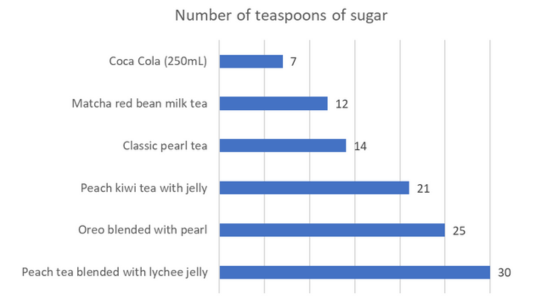 *Nutrition information taken from Sharetea nutrition facts
Bubble tea and diabetes
Bubble tea will increase your blood glucose levels (BGLs), likely above target. This is due to its high carbohydrate and sugar content and because it is a liquid. Liquids are digested faster than solids. This means the sugar in the bubble tea will move quickly into the bloodstream. If you are taking insulin with your meals, the insulin may not be able to get into the bloodstream quickly enough. This may make it difficult to prevent a ‘spike’ in your BGLs, even with the right dose of insulin.
Just like soft-drink, bubble tea is a high energy and high sugar drink. Regularly drinking high sugar fluids can lead to increases in body weight, BGLs and fats in the blood.
How to approach bubble tea with diabetes
If you love bubble tea and want to include it in your diet, take these steps.
- Understand how it affects your BGLs.
Check your BGLs before and 2-hours after drinking bubble tea. Your BGLs should be less than 10mmol/L 2-hours after bubble-tea to be in-target. If your BGLs are above 10mmol/L, try some of the strategies below. You can read more about blood glucose target ranges here.
- Select the smallest size
Most bubble tea stores offer different sizes of bubble tea. Larger sizes will significantly increase the amount of glucose in your body. This will make BGLs higher. Stick to the smaller sizes to reduce how much glucose goes into the blood.
- Ask for less sugar
Many of the bubble tea shops will make your tea with less sugar. You can ask for no added sugar, 25% or 50% less sugar. Even the no added sugar versions of these drinks taste sweet. Train your taste buds to get used to less sugar.
- Be strategic with your choice of toppings
Every extra topping will add more sugar to your drink. Select fewer toppings or no toppings. Pick toppings with less sugar such as aloe vera, seeds or red beans instead of pearls, jelly and custard.
- Treat it like a dessert
Dessert is not something we need to have regularly. In fact, we often enjoy foods and drinks more when they feel like a treat. Use special occasions as a time to enjoy bubble tea. Avoid getting into the habit of having it regularly.
The Bottom Line
Enjoying new food experiences and socialising with friends can be an important part of life. Having diabetes doesn’t mean you need to miss out. Be sensible with your intake of bubble tea. Set boundaries around how often and how much bubble tea you drink, so that like everyone else, you can enjoy this drink in moderation.
To speak to an expert diabetes dietitian for tailored nutrition advice, contact Diabetes Care Plus.

Charlotte Lentfer
Credentialed diabetes educator
Charlotte has experience supporting people with all types of diabetes and is a credentialed diabetes educator. She currently enjoys facilitating group-education sessions, online programs and providing support on the diabetes helpline on behalf of Diabetes Victoria.
Charlotte is passionate about helping people develop or repair their relationship with food and their body, which she believes comes from increased nutrition knowledge and self-compassion.
Outside of work, you will find her playing hockey, gardening and exploring nature.


