

Insulin: A brief history of a lifesaving treatment

Regarded as one of the greatest medical discoveries of the twentieth century, insulin was first successfully used to treat diabetes on the 11th January 1922.
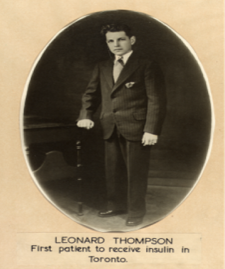
Leonard Thompson, a 14-year-old boy living with type 1 diabetes, was the world’s first person to receive lifesaving insulin treatment at Toronto General Hospital, Canada 1922
Behind the revolutionary treatment was Sir Frederick G. Banting, a young, inspiring medical scientist, who along with his colleagues; Professor John J.R. Macleod, medical student Charles H. Best and biochemist James B. Collip were the first to successfully extract and administer insulin to treat people with diabetes.
Behind the revolutionary treatment was Sir Frederick G. Banting, a young, inspiring medical scientist, who along with his colleagues; Professor John J.R. Macleod, medical student Charles H. Best and biochemist James B. Collip were the first to successfully extract and administer insulin to treat people with diabetes.
A decorated doctor with the Royal Canadian Army, and a recipient of the military cross for heroism during WW1; Banting first became interested in diabetes when he was running his own medical practice and lecturing at the University of Western Ontario, Canada in 1920.
While Banting was teaching diabetes studies, he learned that Insulin could be a potential treatment for type 1 diabetes. Medical professionals had previously attempted to isolate and extract insulin from the pancreases of animals but had been unsuccessful.
In 1920, inspired by research by Doctor Moses Barron about the importance of the islet cells of the pancreas in relation to diabetes, Banting realised that insulin could be extracted from the islets of Langerhans.
With the reported assistance of Professor John J.R. Macleod (there is some controversy surrounding Macleod’s involvement), and 22-year old medical student Charles H. Best, at the University of Toronto, Banting set up his laboratory for his research.
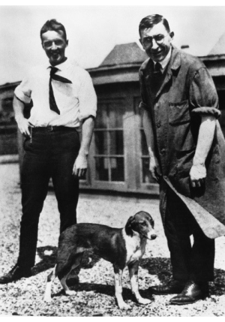
In 1921, Banting and Best commenced experiments on dogs. Banting would perform the pancreatic surgeries on laboratory dogs to extract the insulin and would then treat other dogs whose pancreases had been removed, with that extract. Best would then measure their blood glucose levels. By July, the team experienced a breakthrough with one dog recording a significant reduction in blood glucose levels after receiving a pancreatic “insulin” extract.
This breakthrough led them to Toronto General Hospital, where Leonard Thompson was dying of diabetic ketoacidosis. On 11 January 1922, Leonard was given the first ever injection of insulin in a human. As a result, his blood glucose levels dropped. Celebrations, however, were short-lived as Leonard developed a severe allergic reaction, so subsequent injections were stopped.
To overcome this, Banting needed to refine the pancreatic insulin extract to a more pure, usable form suitable for human use. With the assistance of James B. Collip, they successfully purified the insulin.
On 23 January 1922, the team successfully administered insulin to Leonard, as well as other children with diabetes in the hospital - many of whom were in a coma and extremely close to death. In a touching moment, it is reported that by the time the team reached the last dying child, the first few administered with insulin were waking up, to the immense relief of their families.
In late May, an agreement was reached with pharmaceutical company Eli Lilly & Company to distribute insulin on a larger scale. Shortly after, the first Australian was treated with insulin.
Phyllis Adams, a 6-year old girl from Mosman, Sydney was the first Australian treated, using imported insulin in late 1922. After a long life, Mrs Phyllis Lush (née Adams) passed away on the 19th June 1998. She had the distinction of both living with diabetes and being treated with insulin, longer than any other person in the world.[i]
Thank you to Sir Frederick G. Banting, Charles H. Best, Professor John J.R. Macleod, and James B. Collip; as well as Leonard Thompson and the dogs that helped make this discovery happen. We are eternally grateful every day.
[i] F.I.R. Martin, A History of Diabetes in Australia, 1998, Miranova Publishers


